



CTE Pathway and Course Descriptions
Architectural Design Pathway
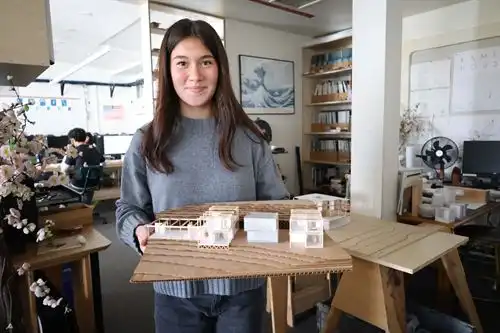
The Architectural Design pathway provides learning opportunities for students interested in preparing for careers in such areas as architecture, industrial design, and civil engineering.
Courses in the pathway:
Landscape Architecture & Design (Concentrator)
Students discover the interconnected relationship between communities and their landscape settings. This hands-on, project-based studio course emphasizes design thinking through tangible creation: students will develop fluency in drawing, build physical models, and implement their own plant plans in the student garden and around campus. The curriculum is enriched with a site tour of the Getty Center Central Garden and direct engagement with professional landscape architects. By the end of this experience, students will possess a foundational design portfolio and a clear understanding of landscape architecture as a career path and field of study.
Architectural Design (Capstone)
Students build upon their foundational knowledge and apply design principles directly to the built environment. This hands-on studio experience is focused on projects that challenge students to define the hierarchy and order of space, explore materiality and form, and integrate site analysis with programmatic needs. The curriculum offers professional exposure through site tours of the Eames and Hollyhock houses in Los Angeles and interaction with practicing architects. Students will finish the term with a design portfolio for college admissions, and those wishing to continue their architectural study can register for the next level, Advanced Architectural Design Studio.
Advanced Architectural Design Studio (Enrichment)
Where is it offered?
San Dieguito HS Academy
Biotechnology Pathway
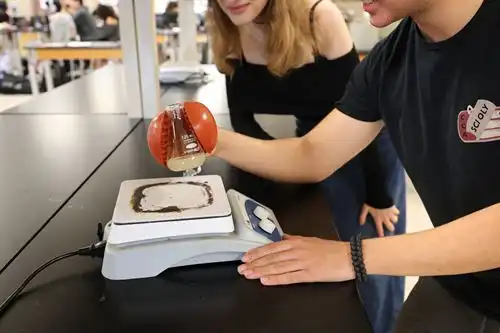
Biotechnology is the application of advances made in the biological sciences, developing new technologies and products that help improve our lives. Biotechnology is primarily used in the health and medicine fields, but is also found in agriculture, chemical, and environmental engineering.
Courses in the pathway:
Biotechnology 1 (Concentrator)
introduces students to the dynamic field of biotechnology through hands-on laboratory investigation and scientific inquiry. Students explore the structure, function, and processes of living organisms while developing practical lab skills essential to biological science careers. Through experimental protocols, students learn to pose questions, design investigations, analyze data, and construct evidence-based explanations. The curriculum integrates biology, chemistry, physics, mathematics, and engineering principles to solve real-world problems. Students build professional communication and collaboration skills while exploring diverse career opportunities in biotechnology, healthcare, research, and industry. This course prepares students for advanced study and provides foundational knowledge applicable to the Biotechnology pathway and related STEM fields.
Biotechnology 2 (Capstone)
explores both the science and business of biotechnology, preparing students for college and career success in this rapidly evolving industry. Students deepen their knowledge of biological research while examining its integration with chemistry, physics, mathematics, engineering, business, and information technology. Through laboratory investigations, project-based learning, presentations, and collaborative discussions, students develop advanced technical and professional skills. The curriculum emphasizes career readiness, including internship preparation and professional interview techniques. Students evaluate diverse post-secondary education and career pathways in biotechnology, gaining practical experience that bridges academic learning with real-world industry expectations in research, healthcare, business, and related fields.
Where is it offered?
Canyon Crest Academy
Business Management Pathway
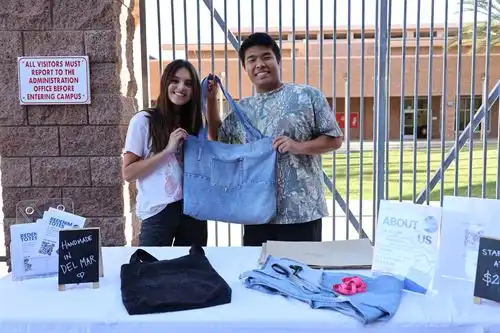
Business Management consists of planning, leading, and controlling an organization or effort to accomplish a goal. In the Business Management pathway, students learn entrepreneurship and business fundamentals, goal-setting, resource allocation, organizational structure and management techniques, economics, financial data, risk management, information technology, and supply chain management.
Courses in the pathway:
Intro to Business (Concentrator)
Introduces trends and opportunities in today's dynamic business environment as they relate to economics, global markets, social responsibility, business ownership forms, entrepreneurship, management, human resources, marketing, operations, and accounting. Students gain important business context and discover many business career and educational opportunities. The course also introduces personal -nance and essential soft skills, while engaging students in the 21st-century competencies of Communication, Collaboration, Creativity, and Critical Thinking. Students will gain hands-on experience working with peers, business professionals, and the community to practice these skills. Students will learn how to leverage technology to solve business problems, support effective operations, and create entrepreneurial opportunities.
Marketing (Concentrator)
Students will explore marketing trends and how they impact business and consumer decisions. This class examines how companies communicate value, influence consumer behavior, and compete in today’s marketplace. Students will understand basic marketing principles that include advertising, promotional strategies, publicity, consumer behavior, and social media. Students will have the skills needed to create integrated marketing campaigns, and to put together a marketing portion of a business plan. The course uses a variety of platforms and media that allow students to analyze the business climate by studying entrepreneurs, businesses, and marketing strategies. The course uses project-based learning utilizing technology, guest speakers, case studies, and digital marketing simulations - with opportunities to earn certifications.
Advanced Business Management (Capstone)
Challenges students to apply the knowledge and skills gained in Intro to Business, Marketing, and Accounting, to real-world projects, cases, and business operations. Throughout the course, students will explore the core functions of management, as well as the process of starting, owning, and operating a business. Using their growing leadership and entrepreneurial skills, students will manage real business ventures. Learning experiences include project-based activities, simulations, collaborative group work, and an analysis of the current business environment through case studies. Students will strengthen their professional communication by delivering presentations, completing group projects, and engaging with community partners. This course prepares students for future studies and roles in management and entrepreneurship.
Business Finance (Enrichment)
Roles in Finance aren’t only about numbers; they require interpersonal skills as well. The world of Finance includes many disciplines, and Finance personnel are critical to the team’s function and success. In Business Finance, we familiarize students with many aspects of finance, including accounting, and the management of the assets, liabilities, equity, and cash flow. This course also covers financial analysis like ROI and ROE, financial planning, and various financial services like banking, insurance, and securities and investments.
Where is it offered?
Canyon Crest Academy
Torrey Pines High School
La Costa Canyon High School
Cabinetry, Millwork & Woodworking Pathway
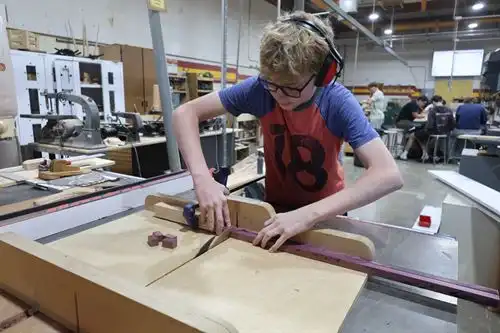
The Cabinetry, Millwork, and Woodworking pathway provides learning opportunities for students interested in preparing for careers in cabinet construction, millwork, finish carpentry, and furniture making for both production and custom products.
Courses in the Pathway:
Woodtech 1 (Concentrator)
Woodtech 1 (Concentrator)
Wood Tech 1 is a hands-on introduction to the fundamentals of woodworking and safe shop practices. Students learn how to work confidently with both hand tools and power tools while exploring the properties of wood as a material. The course emphasizes measurement, layout, joinery, design, and craftsmanship. Projects typically include small boxes, cutting boards, simple furniture pieces, and other functional items that build foundational skills. Safety, responsibility, and attention to detail are emphasized throughout. No prior experience is required—Wood 1 is designed for beginners who want to learn practical skills and express creativity through building.
Woodtech 2 (Capstone)
Woodtech 2 builds on the skills learned in Wood 1, allowing students to take on more complex projects and advanced woodworking techniques. Students deepen their understanding of joinery, furniture construction, wood selection, finishing, and safe machine operation. This course encourages creative problem-solving and independent design, giving students the opportunity to plan and construct larger or more intricate pieces such as small furniture, cabinets, or custom-designed projects. Wood 2 emphasizes craftsmanship, precision, and design thinking, preparing students for advanced coursework, career-technical pathways, or personal craftsmanship beyond high school.
Where is it offered:
Torrey Pines High School
San Dieguito HS Academy
Design, Visual, Media Arts Pathway
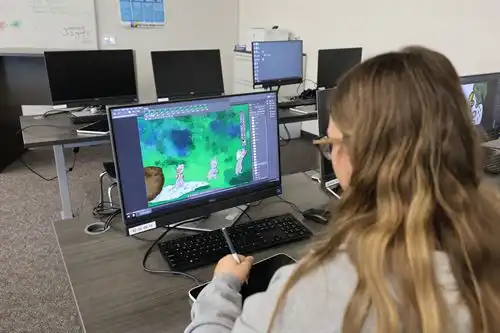
The Design, Visual, and Media Arts pathway includes occupations that use visual art, digital media, and web-based tools and materials as the primary means of communication and expression. In addition to understanding current workplace practice, this career pathway requires developing knowledge and skills in visual art concepts and new and emerging digital processes that enable individuals to create and communicate complex ideas across a broad range of occupations and professions.
Courses in the Pathway:
Fine Art Digital Photo (Concentrator)
Is designed for students who are interested in fine art photography with digital tools. General computer experience is expected, but no prior knowledge of the particular software programs used in the class is required. Because of the project-based nature of the class, students at all levels will be able to learn at their own pace and create meaningful pieces to add to their portfolio. The Visual Arts Standards are infused in the Digital Photography curriculum. You will start by “learning to really see photography” (artistic perception and aesthetic valuing) and “studying the masters of photography” (historical and cultural context). Throughout the photographic projects that you complete (creative expression), you are constantly evaluating the artistic skill, both aesthetics and expression, of your own and other’s work (aesthetic valuing) and placing the work in a broader context (connections, relationships, and applications and historical and cultural context). In addition, throughout the course, you will be constantly evaluating your own work and your own progress (connections, relationships, applications).
Digital Art and Design (Concentrator)
The Digital Art and Design course is built to enhance students’ understanding of digital image-making processes and advance design thinking skills through a myriad of projects that include photo compositing, concept art, commercial graphic design, identity branding, and many more. Through thoughtful real-world exercises and projects, visiting artists, and intensive workshops.
Advanced Digital Art and Design (Capstone)
Students develop a critical eye and understanding of how images and design affect us culturally, and how images, graphics, and products are used to entertain, inform, and influence humans at all levels. *Students may take the course more than one time for credit, and each time they repeat it, they will learn further artistic techniques, explore new digital media and concepts, and will create different pieces. Students will work with new groups and collaborations. Pathway completers will develop a professional portfolio and understand the application of gained skills in workplace environments.
Photo Imaging (Capstone)
Photo Imaging takes the principles and technical information learned in the Digital Photography course and applies it to a commercial photography curriculum. The profession of photography, rather than the art of photography, is the heart of the course. Students will compile a professional portfolio that focuses on work for clients’ needs. Resumes, web portfolios, and interview practice will be covered, as well as work-related habits and expectations. Emphasis will be on portraiture, promotion, event photography, product still life, fashion, group photography, architecture, food, and design for advertisements. Students will learn pre-production through post-production skills with an emphasis on concept and execution of proposed ideas. Weekly output of quick one-day assignments as well as longer week-long units of work for students, with a variety of coursework and expectations.
Where is it offered:
Torrey Pines High School
Canyon Crest Academy
Education Pathway
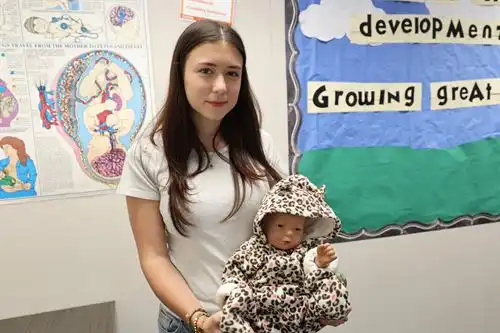
The Education pathway is designed to prepare students for professional or learning support positions in education, from pre-kindergarten through grade twelve. Students study human development; standards, regulations, and codes; positive guidance and counseling techniques; age-appropriate and grade-appropriate learning strategies; learning theories; and standards-based curriculum and instructional design. Students can apply and practice their knowledge and skills at a variety of elementary and secondary education sites.
Courses in the Pathway:
Child Development (Concentrator)
Child Development prepares students to understand children’s physical, intellectual, and social-emotional development from conception through adolescence. It covers major developmental theories and research, from prenatal growth through puberty. Emphasis is placed on physical, cognitive, emotional, and social progression, including genetics, health and safety, cultural and family influences, and the needs of children with diverse backgrounds and abilities. Students study key psychologists, analyze research, and examine issues such as guidance, discipline, cultural diversity, and child abuse. They gain practical experience through research, simulations, guest speakers in child-focused careers, and American Red Cross Babysitting Basics training, building a foundation for further study in psychology, human development, or education.
Teaching and Learning 1 (Capstone)
Teaching and Learning is the culminating academic and practical experience within the CTE Education Pathway. It prepares students for postsecondary study and careers in education by deepening their understanding of foundational and contemporary theories of teaching and learning. Instruction builds key academic and professional skills, including public speaking, analytical reading, expository writing, problem-solving, and critical thinking. Students explore career opportunities within the Education Pathway. This course is structured to integrate theory and practice through supervised internships at local elementary school sites, where students observe instructional practices, engage with mentor teachers, and apply pedagogical concepts in educational settings. These rigorous, guided experiences help students cultivate the knowledge and skills essential for success in a career in education.
Teaching and Learning 2 (Enrichment)
In this enrichment course, students apply and further the knowledge and work-based skills acquired in Teaching and Learning 1 to this higher-level field-based course. Partnering with mentor teachers in local elementary schools in the district, students participate in real-world educational experiences in the elementary classroom throughout the academic year. Using their prior knowledge and work-based experience in T&L 1, students further analyze and demonstrate their understanding of educational theories and practices, classroom management strategies, child development stages, and instructional practices through college-level textbook activities, teacher mentorship, and field experiences. In collaboration with mentor teachers, students will build upon lesson plan elements learned in T&L1 to plan and deliver lengthier and more involved lessons to elementary students; plans will be directly related to current educational concepts being studied in this class. Students explore post-secondary education and career options via coursework and information provided by various guest speakers from the educational community. Students will demonstrate understanding of various career options via research and presentations to classmates.
Where is it offered:
La Costa Canyon High School
Engineering Technology Pathway
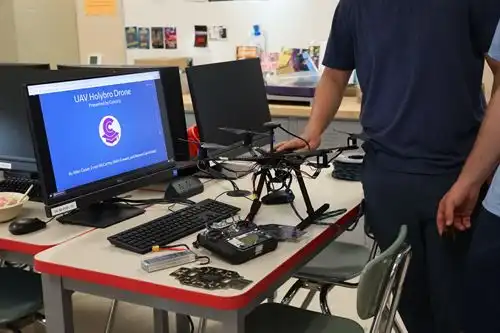
The Engineering Technology pathway provides learning opportunities for students interested in preparing for careers in the design, production, or maintenance of mechanical, electrical, electronics, and computer and electromechanical systems and products.
Courses in the Pathway:
Intro to Engineering (Concentrator)
Introduction to Engineering Techniques provides students with tools to pursue further study in engineering. This includes but is not limited to the study of measurement, CAD, electrical circuits, mathematical analysis, basic fabrication, and engineering design. Coursework is heavily project-based, as well as reading texts and writing. Assignments will be from various fields of engineering, including Mechanical, Electrical, and Aerospace. The class is intended for those interested in exploring engineering as a career or seeking a CTE class that is connected to STEM.
Digital Electronics (Concentrator)
This Digital Electronics course is the concentrator course in our Engineering CTE Pathway. It focuses on Digital circuit design that includes topics in combinational and sequential logic, optimization techniques, timing considerations and waveforms, state machines, and simulation techniques. The course also stresses the importance of the design cycle, including teamwork, communication methods, engineering standards, and technical documentation. All topic areas are supplemented with hands-on projects. This course is UC-approved.
CAD/FAB (Concentrator)
CAD/FAB will introduce students to the design process from theory to prototype. Students will use one or more CAD programs to create drawings of parts and/or architectural designs and implement them into a finished product with industry-standard tools, supplies, and equipment. CAD/FAB provides students with the skills needed to turn ideas for an object into a real physical product. Students will produce drawings using industry-standard CAD programs. The drawings can be fed into devices like 3D printers for rapid prototyping and exported to blueprints for project completion. All projects support understanding of curriculum, design, and materials.
Adv Engineering and Technology (Capstone)
Advanced Engineering & Technology is the capstone course in our Engineering CTE Pathway. It is a yearlong, project-based class built around an extensive understanding of engineering systems and the incorporation of industry practices. The main focus of the class involves solving advanced large-scale engineering design problems. Students enrolled in this course will collaborate to design, create, and test both large-scale individual and group projects that include, but are not limited to, aspects of Mechanical, Electrical, Civil, Industrial, and Environmental Engineering. This course is UC-approved.
Where is it offered?
Canyon Crest Academy
Torrey Pines High School
Film, Video Production Pathway
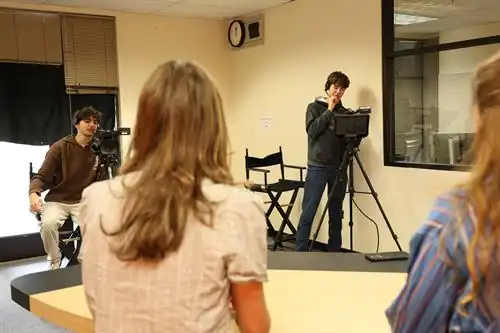
Whatever the form or medium of creative expression, all careers in the Arts, Media, and Entertainment sector require “publication” or a public presentation in one way or another. Consequently, the Film, Video Production pathway focuses on both the technical skills and the organizational and managerial knowledge necessary to bring arts, media, and entertainment to the public.
Courses in the Pathway:
Video Film (Concentrator)
Video/Film is an introductory course focused on both the broadcast and film industries. Students will learn to use digital cameras and Adobe Premiere Pro to create projects that meet industry standards for both television and film. Students will participate in project-based learning by working in small groups through all stages of production—from pre-production planning to post-production editing.
Advanced Video Film (Capstone)
This course builds on your prior experience and takes your skills to the next level by creating live news broadcasts and short films modeled after the real-world film and broadcast industries. You’ll develop professional-level production skills, take on leadership opportunities, and create content that reflects industry standards. Whether you're planning a career in media or just want to better understand the craft, this class gives you the tools and experience to succeed. Each class features student leaders who help guide the production process.
Where is it Offered?
Canyon Crest Academy
La Costa Canyon High School
San Dieguito Academy
Torrey Pines High School
Food Service & Hospitality Pathway
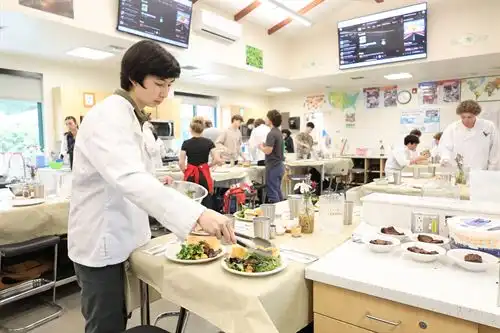
The Food Service and Hospitality pathway focuses on the key aspects of the industry. Students pursuing this career pathway have in-depth, hands-on experiences that emphasize industry awareness; sanitation and safe food handling; food and beverage production; nutrition; food service management; and customer service.
Courses in the Pathway:
Culinary Arts 1 (Concentrator)
Culinary 1 provides students with foundational culinary knowledge and hands-on kitchen experience. Students learn essential skills in food safety and sanitation, knife skills, basic cooking methods, kitchen equipment use, nutrition principles, recipe reading, and foundational culinary math. Students prepare a variety of dishes in collaborative kitchen labs while practicing communication, teamwork, organization, and safe work habits. It introduces career awareness in culinary, food service, and hospitality fields and aligns with the California CTE Model Curriculum Standards for the Food Service & Hospitality pathway.
Culinary Arts 2 (Capstone)
Culinary Arts 2 builds on Culinary Arts 1 and expands students’ skills through complex techniques and global cuisines. Students explore international flavor profiles, cultural food traditions, advanced mise en place, plating, menu concepts, and higher-level cooking and baking methods. The course emphasizes production efficiency, kitchen workflow, nutrition applications, and professional practices in restaurant and hospitality settings. Career exploration includes culinary, baking, food service, and hospitality. The course aligns with the California CTE Model Curriculum Standards for the Food Service & Hospitality pathway.
Sous Chef (Enrichment)
Sous Chef is designed for the culinary arts student who is interested in continuing the development of their cooking and baking skills through a more focused exploration of specialized topics of interest to them. In restaurants that are organized based on the classical French brigade system, the sous chefs serve as the most trusted assistants to the executive chef who is in charge of running the restaurant. The sous chef has demonstrated his skill and passion in the kitchen and is given increasing responsibility in the daily operation of the restaurant, such as planning daily specials, running smaller catering operations, and providing guidance for the other cooks in the kitchen. Young student chefs in the Sous Chef course will assume the same mixture of responsibilities by continuing to hone their culinary repertoire through focused skill development, as well as helping to provide guidance and leadership for other students who are still in the introductory level culinary courses. The purpose of Sous Chef is to provide an opportunity for students to build upon the culinary skills they have developed in previous culinary courses by stepping into a leadership and peer mentoring position for other students who are just beginning their culinary exploration. Additionally, Sous Chef students will work closely with the instructor and receive guidance in the focused exploration of an area of interest that will benefit them in a future educational and/or career path within the food service and hospitality industry and will compile a detailed portfolio of their work as evidence.
Where is it Offered?
La Costa Canyon High School
San Dieguito HS Academy
Torrey Pines High School
Graphic Production Technology Pathway
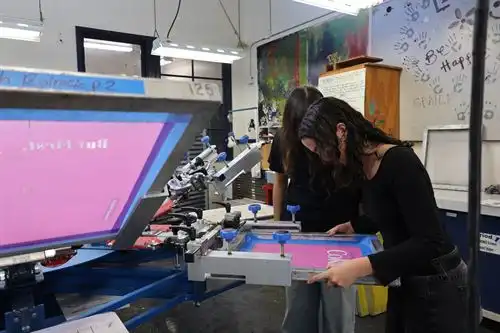
The Graphic Production Technologies pathway provides students with an understanding of printing and manufacturing processes and systems common to careers in the graphic arts and printing technology industries. Representative topics include the principles of design composition, graphic design and layout, typography, image generation and file preparation, photography, digital imaging, prepress preparation, printing and screenprinting technologies, binding and finishing processes, multimedia blending, business and entrepreneurship principles, prototype product design, computer-aided design, and computer-aided manufacturing.
Courses in the Pathway:
Screenprinting 1 (Concentrator)
Screen Printing 1 explores myriad aspects of screenprinting, otherwise known as serigraphy, a dynamic and thriving visual art medium. Students will create original works of art utilizing a wide range of imaging techniques, from handmade and photographic images to abstract visual forms, printed on a variety of different surfaces. Students will learn industry-standard graphics programs such as Adobe Illustrator and Photoshop to generate scalable images and to transfer them into a screen stencil coated with a light-sensitive, photopolymer emulsion. The printing process is a positive-negative-positive technique that faithfully reproduces artwork in fine detail. In addition to screen prep and printing basics, students will mix inks, explore historical trends and artists within the screenprinting community, and learn registration techniques to faithfully reproduce their images. This knowledge is transferable to a host of other printing techniques and provides a solid knowledge base for a graphics reproduction career.
Screenprinting 2 (Capstone)
Screen Printing 2 is an advanced study of screen printing utilizing a combination of laboratory applications and theory, providing a foundation. Students will create a unique portfolio showing major goals, which include: printing processes, business aspects, case studies, advanced color reproduction, and close registration with an emphasis on quality control of screen-printed media. Students will develop a professional portfolio and collaborate with local businesses and non-profit organizations to gain first-hand business and production experience within the field. Students will create original vector- and pixel-based artwork and the processes required to faithfully reproduce artwork onto fabric and paper as in the first course, but will also be exposed to techniques to print on metal, vinyl, glass, and wood. In addition, students will learn the basics of proper ink selection and application to non-traditional substrates while gaining knowledge in proper disposal and industry safety considerations. Student portfolios will display to a future employer or educational institution a mastery of print placement, ink coverage, opacity and texture, alternative graphics transfer, halftone and CMYK process printing, as well as ultra-fine registration of multicolored screen-printed images. At course completion, students will be viable candidates for an entry-level position in the serigraphy field and be competent in project planning, copy preparation, screen preparation, stencil production, property safety and waste management, and printing.
Where is it Offered?
San Dieguito HS Academy
Welding and Materials Joining Pathway
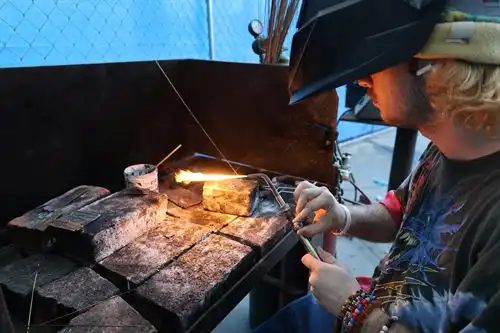
The Welding and Materials Joining pathway provides students with an understanding of manufacturing processes and systems common to careers in welding and related industries. The following pathway standards are based on, but not limited to, well-established American Welding Society (AWS) EG2.0 Guidelines for the Entry Level Welder. Representative topics include the interpretation and layout of welded and assembled-part prints, cutting, mechanical bonding, joining, cohesive bonding, adhesive bonding, and mechanical fastening.
Courses in the Pathway:
Metals 1 (Concentrator)
Metals 1 introduces students to the essential principles of modern manufacturing and metalwork. Throughout the course, students develop a diverse technical toolkit, ranging from traditional techniques like blacksmithing and jewelry making to high-tech applications such as laser cutting, 3D printing, and the operation of Computer Numerically Controlled (CNC) machines. The curriculum emphasizes precision measurement and shop literacy, teaching students to interpret professional plans and utilize Computer-Aided Design (CAD) software to bring their concepts to life. By mastering a variety of industrial equipment—including lathes, vertical mills, and plasma cutters—students gain the hands-on experience necessary to execute complex projects in a state-of-the-art machine shop environment.
Jewelry Making (Concentrator)
Jewelry and Metal Art is an engaging, hands-on introductory course where students create unique projects from metal and mixed media in a safe and supportive environment. The curriculum explores a diverse range of artistic techniques, including traditional jewelry fabrication, wire wrapping, glass bead making, and blacksmithing. Students also gain experience in advanced processes such as casting silver and bronze rings, creating large-scale sculptures, and utilizing modern tools like Computer-Aided Design (CAD) and 3D printing. Designed to be accessible to all skill levels, this creative course emphasizes artistic expression and can be successfully completed without the use of heavy machinery.
Welding and Metals Fab (Capstone)
Welding and Metal Fabrication offers students the opportunity to earn college credit through Palomar Community College while mastering the fundamentals of metalwork and design. The curriculum covers a comprehensive range of welding processes—including oxyacetylene, TIG, Stick, MIG, and ux-core welding, as well as brazing and soldering—alongside essential skills in technical drawing and Computer-Aided Design (CAD). Beyond technical proficiency, students gain hands-on experience in the safe operation of industrial machinery and have the unique opportunity to earn professional welding certifications at no cost. Once foundational skills are mastered, students apply their knowledge to diverse fabrication projects, ranging from intricate jewelry to large-scale structural builds.
Metals 2 (Enrichment)
Where is it Offered?
San Dieguito HS Academy
Professional Music Pathway
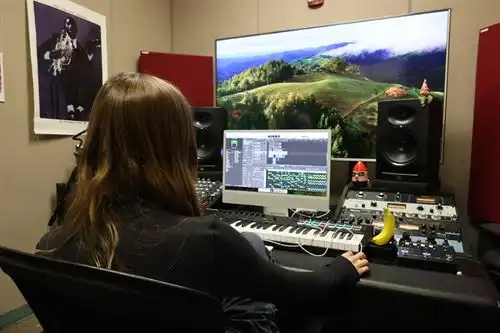
The Professional Music pathway focuses on the direct creation of art and entertainment by the individual artist instead of through a secondary physical medium. Performing artists are themselves the medium of creative expression.
Courses in the Pathway:
Digital Composition (Concentrator)
Digital Composition is your launchpad into the dynamic world of digital music composition and production. It is designed to introduce you to the industry-standard tools and techniques utilized by professionals, seamlessly integrating practical digital production skills with foundational composition and music theory knowledge. The course has an emphasis on hands-on, project-based learning. You will actively use industry-standard software—specifically Logic Pro for the majority of our work—to create and refine your own original music. Whether you are a seasoned instrumentalist or have never touched an instrument, the comprehensive topics covered will equip you with the creative tools and technical knowledge needed to excel in your musical pursuits. By the end of this course, you will possess a strong foundation in both the art and technology of music creation.
Rock Band (Concentrator)
Rock Band is an intensive Career and Technical Education (CTE) enrichment course designed to forge well-rounded music professionals by blending rock and pop performance skills with music industry knowledge. If you are serious about pursuing a career in the dynamic music industry or just love to play your instrument, this course provides the comprehensive foundation necessary for success. You will be treated as an emerging professional, expected to demonstrate self-motivation, independence, timely deadline adherence, and efficient, effective small-group performance collaboration.
Recording Arts (Capstone)
Recording Arts provides a comprehensive introduction to the craft of Recording Arts, integrating both analogue recording principles and modern digital audio production (DAW) techniques. Designed as a Career Technical Education (CTE) course, the curriculum is focused on industry standards and preparing students for professional opportunities in audio technology. This practical, project-based audio course demands self-motivated team collaboration and adherence to professional deadlines. Students utilize the computer lab and professional studio to perform, record, and produce original music. The course offers vital experience with current workflows and serves as a bridge to audio production careers and internships.
Adv Recording Arts (Enrichment)
This course will build on the skills the students learned in these courses and offer lectures and projects based on more advanced audio topics. The Advanced Recording Arts course will cover professional-level concepts including the history of the recording industry and technology, signal flow and use of various recording hardware, advanced audio recording techniques, advanced mixing and editing concepts, advanced mastering, sound reinforcement, music production skills, music business skills, and careers in the recording field. Students have access to industry software (Pro Tools, Reason, Sibelius) as well as hardware and microphones needed to complete professional-grade recordings. Students will work on largely self-directed recording and audio production projects designed to mirror real-world work in this field. This course is written to be repeatable as it allows the students who are looking at this career to be able to continue to develop their skills over time. Every audio production project presents unique challenges based on genre, artistic considerations, various recording and mixing techniques, room and microphone choices, and a host of other skills needed in this field.
Where is it Offered?
Canyon Crest Academy
La Costa Canyon High School
Professional Theater Pathway
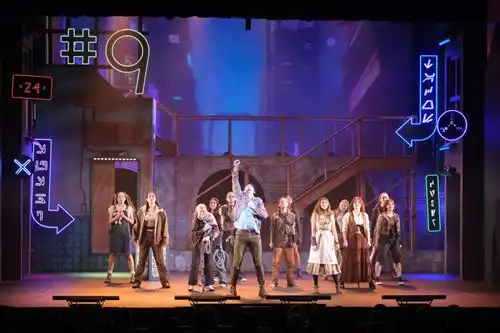
Whatever the form or medium of creative expression, all careers in the Arts, Media, and Entertainment sector require “publication” or a public presentation in one way or another. Consequently, the Professional Theater pathway focuses on both the technical skills and the organizational and managerial knowledge necessary to bring arts, media, and entertainment to the public.
Courses in the Pathway:
Intro to Professional Theater (Concentrator)
This collaborative course serves as the foundational entry to the Professional Theater Pathway. Through the study of theater games, improvisation, and acting theory, students cultivate high-level communication and leadership skills, building the poise to excel in challenging environments. The benefits of theater training are vital: Bravery. Support. Playfulness. Creativity. This journey of artistic and self-discovery is open to all students, regardless of prior experience.
Intermediate Professional Theater (Capstone)
Building upon foundational skills, this Capstone course prepares the serious student for university-level study and professional careers in the arts. Students master advanced techniques in vocal training, character development, and rigorous script analysis. By working within a professional-level production environment, students gain a comprehensive understanding of the industry while exploring a vast breadth of styles—from Shakespearean roots to contemporary drama, musical theater, and film. This course challenges the student to transform their creative passion into technical mastery.
Adv Professional Theater (Enrichment)
Where is it Offered?
La Costa Canyon High School
Torrey Pines High School
Software and Systems Development Pathway
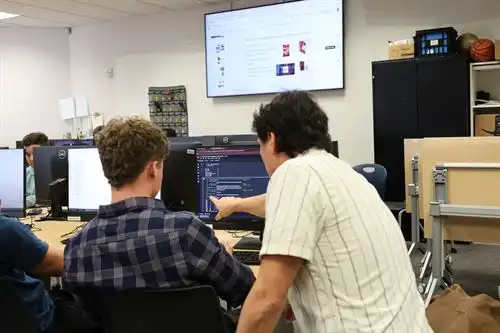
Students in the Software and Systems Development pathway prepare for careers related to computer science that involve the design, development, implementation, maintenance, and management of systems that rely on software programs to satisfy the operational needs of modern business organizations. Persons with expertise in systems development and programming are critical to support operations like electronic commerce, medical records management, retail sales and inventory management, digital entertainment, and use of energy.
Courses in the Pathway:
Computer Science Foundations (Concentrator)
Computer Science Foundations is an introductory course that exposes students to core computer science areas, including computing systems, algorithms, networks, programming, data analysis, and physical computing. Students apply foundational knowledge and computational thinking to ask questions, investigate problems, and create explanations rooted in modern technology. The course equips all students with essential technology and problem-solving skills needed for today’s workforce.
Computer Programming (Concentrator)
Computer Programming is a year-long concentrator course in the Computer Science CTE pathway in which students build a strong foundation in computer science and software development using Python. Students learn to design, write, and debug programs, work with data, and develop algorithms using variables, conditionals, loops, functions, lists, and basic data structures, while practicing problem-solving, collaboration, and clear documentation. These programming fundamentals prepare students for advanced topics such as data science, machine learning, and artificial intelligence, which are rapidly growing in our society. Applications include self-driving cars, personal assistants, product recommendations, robotics, data analysis, and web searching and typically involve self-learning systems trained on large amounts of data and the integration of “intelligence” based on algorithms. Students completing this course will be prepared for subsequent courses in the Software and Systems Development pathway, including those focused on data science and machine learning.
Computer Game Design (Concentrator)
Game Design provides entry-level and advanced training in the principles of computer game design, programming, and industry awareness. Instruction blends technical skills with Arts, Media, and Entertainment competencies and emphasizes project management used in the game industry. Students complete both team and individual projects involving programming, animation, design, and other media used in game production. The course also introduces industry-standard game design software
Human-Computer Interaction (Capstone)
Human-Computer Interaction introduces students to software development, UI/UX, and cloud computing using industry-standard tools. Students learn user-centered design and apply it to create web applications. Topics include JavaScript, the software development life cycle, project management, version control, and collaborative coding with GitHub. Students also explore APIs, databases, QA testing, and integration techniques. Using Firebase, they will build and host their own web apps. Through hands-on projects, students develop practical skills to design, create, and deploy real-world applications.
Machine Learning (Capstone)
Students build on prior programming experience to explore how computers can learn from data. Topics include data collection and preparation, basic data science, supervised and unsupervised learning (such as classification, regression, and clustering), and an introduction to neural networks. Students use Python-based tools to experiment with training and evaluating simple models and consider the ethical and societal impacts of AI, including bias, privacy, and transparency. Throughout the course, they apply concepts to real or realistic data sets in labs and projects that connect machine learning to real-world problems. Recommended preparation: Computer Programming or an equivalent Python programming course.
Where is it Offered?
Canyon Crest Academy
La Costa Canyon High School
San Dieguito HS Academy
Torrey Pines High School
Sports Medicine Pathway
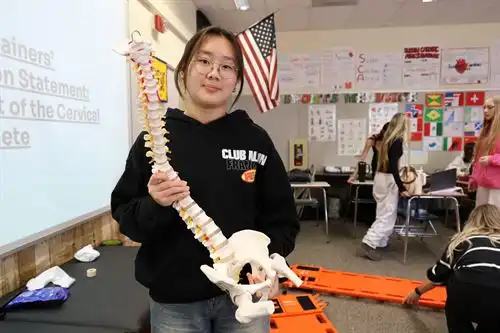
Sports Medicine focuses on the treatment and prevention of injuries stemming from sports participation, exercising, or some type of physical activity. Common injuries in sports medicine include sprained and fractured ankles, knee and shoulder injuries, tendonitis, concussions, and heat exhaustion.
Courses in the Pathway:
Sports Medicine 1 (Concentrator)
Sports Medicine 1 provides an overview of the field of sports medicine with an emphasis on the prevention, recognition, evaluation, first aid/CPR/AED, rehabilitation, and treatment of athletic injuries.
Sports Medicine 2 (Capstone)
Sports Medicine 2 builds upon Sports Medicine 1 with a focus on advanced psychomotor skill development. The course emphasizes athletic injury assessment and rehabilitation, the application of therapeutic modalities, and the legal and ethical responsibilities within the profession of sports medicine.
Where is it Offered?
Torrey Pines High School
Systems, Diagnostics, Service & Repair Pathway
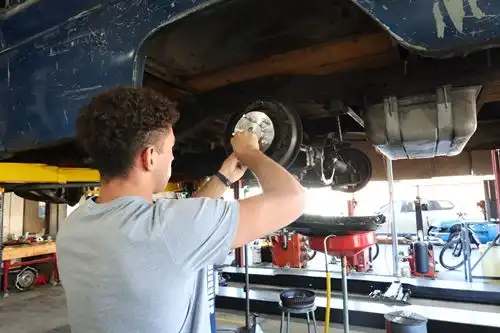
The Systems Diagnostics, Service, and Repair pathway prepares students for postsecondary education and employment in the transportation industry, which includes, but is not limited to, motor vehicles, rail systems, marine applications, and small-engine and specialty equipment. Automotive technology involves inspecting, fixing, and maintaining various components that keep a vehicle working properly, including the engine, brakes, steering, suspension, electrical systems, tires, and heating and air conditioning.
Courses in the Pathway:
Automotive Technology (Concentrator)
Automotive Technology covers the care & preventive maintenance of the automobile bumper to bumper. Including tires, drivetrains, wheels, brakes, suspension, fuels, oil and lubricants, emissions, basic engine performance, electronics, diagnostic procedures, alternative fuels, safety factors, and budgeting.
Auto Engine Performance (Capstone)
Automotive Engine Performance covers service for the theory & operation of vehicles with internal combustion engines, EV/Hybrids, and advanced chassis & electrical repair. This covers ignition, fuel, emissions, computer systems & prepares students for careers in automotive repair, engineering, & diagnosis.
Where is it offered?
San Dieguito HS Academy
Torrey Pines High School


